Carbonel Downs Gender-Segregation Policy
The Knife of Never Letting GoThe Carbonel Downs Gender-Segregation Policy separates women from the settlement’s public life: they live in a dormitory outside town, perform domestic work, and are excluded from men’s affairs. Its force lies not only in where women are housed, but in how their work, movement, and credibility are restricted. Viola’s experience makes the consequences plain: even when she has information about an approaching army, the men who hold authority treat her as a girl rather than as a witness.
Arrangement and Daily Life
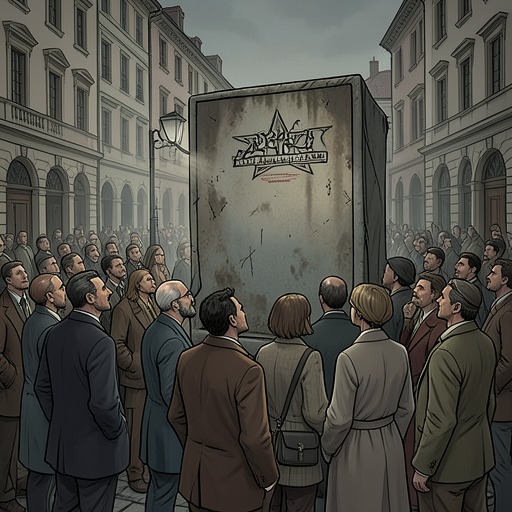
The policy comes into view when Todd wonders whether the women of Carbonel Downs have died. Viola corrects him: women are present, but they live together in a large dormitory outside town. Their assigned tasks are cleaning, cooking, and having children. The separation is therefore not a simple absence of women from the settlement. Women sustain its domestic life while being kept apart from the place where men conduct public business.
The location of the dormitory makes the boundary concrete. Todd recognizes a similar division from a place he passed on his journey, where men slept in one area and women in another. At Carbonel Downs, however, the arrangement is described as a standing social order: women are housed beyond the town and denied influence over men’s affairs. The evidence does not describe the policy as a written statute; it is presented through the settled organization of living space and work.
Music and Restricted Movement
A continuously changing music further shapes women’s access to the settlement. Todd hears it more loudly outside Doctor Snow’s well-kept garden, where buildings are visible through the trees. The music changes often, apparently to prevent listeners from becoming accustomed to it. Viola explains that it is almost unbearable in the settlement’s middle, and that most women do not bother to leave the dormitory and enter town. She identifies this effect as the point of the arrangement.
The music thus works alongside the dormitory boundary. Women are not merely assigned a separate residence; the environment of the settlement’s center discourages their presence there. The result is a division maintained through both social organization and the conditions of movement. The account does not establish that the music is the only means of exclusion, but it shows that its impact falls unevenly: the central area remains accessible to men while many women stay outside it.
Viola’s Warning and the Right to Speak
The policy also governs whose knowledge counts. Before the men turn to Todd, Viola says she had warned them about the army. They did not listen to her; they called her a little girl and treated her warning dismissively. Their interest changes only after caravans of refugees begin arriving on the river road. The shift exposes a gap between having relevant knowledge and being recognized as someone entitled to provide it: the warning was available earlier, but the men’s response did not give it weight.
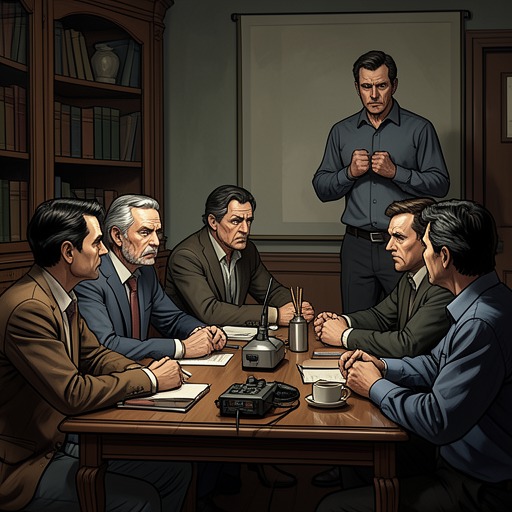
That dismissal persists when the danger becomes an immediate subject of discussion. Doctor Snow asks Todd whether he comes from Prentisstown, while Viola attempts to explain that Todd saved her. An armed man orders her to be quiet, and Doctor Snow himself says that it is not the time for women to speak. He then questions Ben about what he has told his army and about Carbonel Downs’s men and fortifications. The scene puts the restriction into practice: men exchange information about military preparations while Viola, who has already tried to warn them, is told to stop speaking.
Doctor Snow’s judgment is not wholly reducible to that dismissal. He says that Viola’s only offense was telling a lie that saved her friend’s life, and he recognizes that the settlement faces a serious threat. But this defense of her action does not give her equal standing in the discussion. The contrast is especially sharp because the same meeting acknowledges the value of the information and testimony that the men are gathering, while Viola’s contribution is constrained by her gender.
Consequences and Significance
The policy makes a distinction between women’s presence and women’s participation. Women live in Carbonel Downs and perform work on which ordinary life depends, yet their residence outside town, limited movement into its center, and exclusion from men’s business keep that contribution from becoming public authority. Viola’s treatment shows the practical cost: a warning about the army is discounted until events bring refugees to the river road, and even then she must contend with men who tell her not to speak.
The episode presents segregation as more than a division of sleeping quarters. Domestic duties, physical separation, the deterrent effect of the music, and the denial of a credible voice reinforce one another. The policy’s operation is clearest in the contrast between the information men solicit from Todd and Ben and the warning they previously ignored from Viola. Carbonel Downs’s order preserves women as workers within the settlement while excluding them from decisions about its defense.